

 See My Latest Article on HelloNation

Strange sounds from a vehicle are often early warnings that a part is loose, worn, damaged, or rubbing where it should not. A clicking, humming, squealing, or clunking noise may come from the engine, suspension, wheels, brakes, exhaust, or even a damaged body panel.
In Patchogue, NY, changing temperatures, winter road salt, potholes, damp coastal air, and frequent stop-and-go driving can all contribute to unusual vehicle sounds. The sound itself, when it happens, and how it changes with speed or steering provide useful clues.
What does a new noise usually indicate?
A new driving noise generally means that something has changed mechanically or physically. That change may be minor, such as a loose trim panel, or more serious, such as a failing brake component or damaged suspension part.
Pay attention to four details:
- When the noise occurs: during braking, acceleration, turning, idling, or bumps
- Where it seems to come from: front, rear, underneath, inside the cabin, or near a wheel
- What affects it: vehicle speed, engine speed, steering angle, road surface, or weather
- Whether other symptoms are present: vibration, pulling, warning lights, fluid leaks, or reduced braking
A sound that happens only over bumps may have a different cause than one that rises and falls with road speed. Recording a short video or noting the conditions can help identify the pattern.
What causes squealing or screeching?
High-pitched squealing commonly comes from brakes, belts, tires, or metal rubbing against metal. The meaning depends on when the sound occurs.
Brake-related squealing may result from worn brake pads, surface rust after sitting, debris near the rotor, or a brake component that is not moving freely. A brief squeak on the first drive after rain may be harmless surface moisture, but repeated noise during braking deserves attention.
A squeal from the engine compartment may involve an accessory belt, tensioner, or pulley. If the noise appears during startup, acceleration, or when electrical accessories are switched on, the belt system may be under additional load.
Tires can also squeal during tight turns or quick acceleration. This may reflect underinflation, uneven wear, misalignment, or a road surface with limited traction.
Why does the vehicle make a clicking noise?
Clicking during turns often points to a worn outer constant-velocity joint, especially when the sound repeats as the steering wheel is turned sharply. A loose wheel cover, damaged splash shield, or small stone near a brake component can create a similar rhythmic noise.
Clicking that follows engine speed may come from the engine compartment. Possible causes include low fluid, a loose component, or internal wear. A rapid clicking sound during startup can also be associated with an electrical or battery-related problem, particularly if the engine turns over slowly.
A single click or pop when changing direction may come from a loose suspension or steering component. Because these parts affect vehicle control, repeated clunking or clicking should not be ignored.
What does humming or growling mean?
A humming or growling noise that increases with vehicle speed may be related to a wheel bearing, tire wear, or drivetrain component. Wheel-bearing noise often changes when the vehicle gently shifts left or right, although a road test should be performed carefully and only where conditions are safe.
Uneven tire wear can create a repeating hum or rumble. “Cupping,” in which sections of the tread wear unevenly, may result from worn suspension parts, poor alignment, improper tire pressure, or inadequate wheel balance.
A humming sound that changes with engine speed rather than road speed is more likely to come from the engine or an accessory. Distinguishing between engine speed and vehicle speed is one of the most useful ways to narrow down the cause.
Why does the car clunk over bumps?
Clunking over potholes, driveway entrances, or uneven pavement often involves suspension or steering components. Worn shock absorbers, struts, sway-bar links, control-arm bushings, ball joints, or loose mounting hardware may produce a heavy knock.
Winter road conditions can make this issue more noticeable. Pothole impacts may bend a wheel, damage a tire, loosen a splash shield, or disturb body hardware. Road salt and moisture can also accelerate corrosion around underbody fasteners and brackets.
Not every clunk is a suspension failure. A loose jack, spare tire, trunk item, bumper support, underbody shield, or exhaust hanger can create a sound that seems to come from beneath the vehicle. Removing unsecured items from the cargo area is a simple first check.
What noises are connected to body damage?
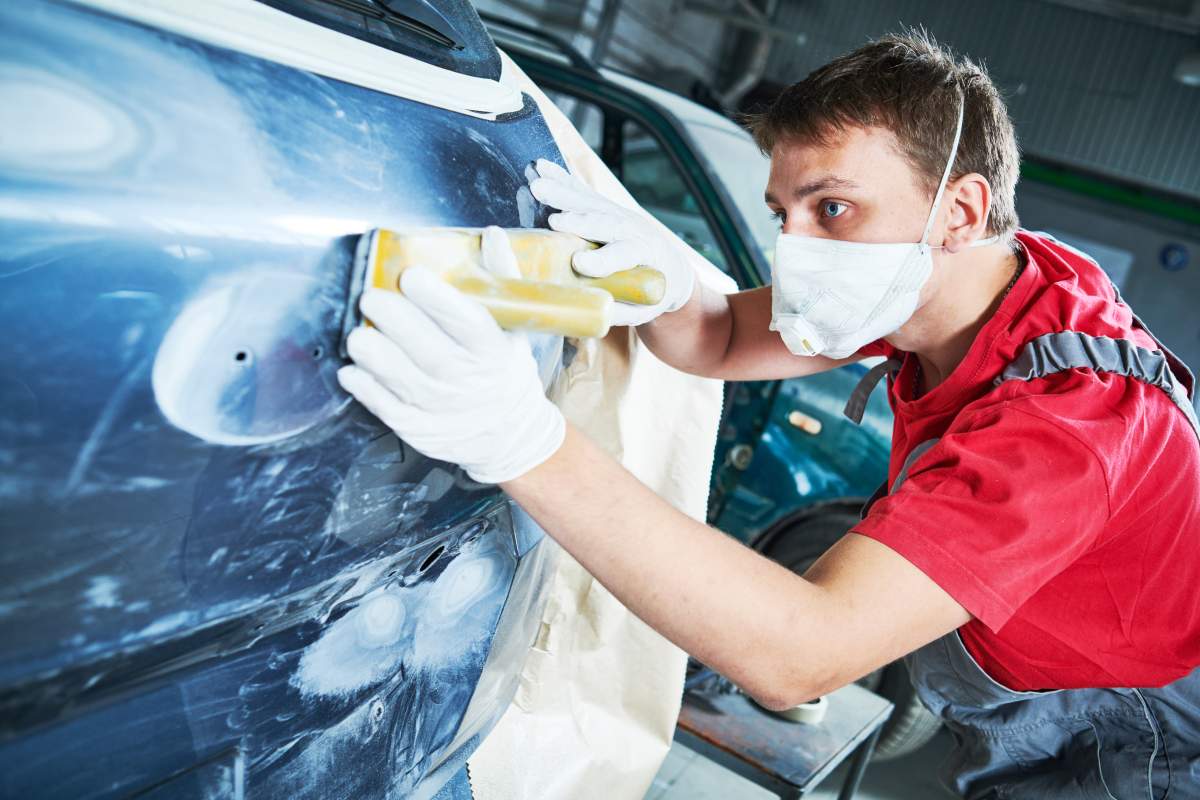
Auto body damage can create sounds even when the vehicle still drives normally. A bent fender liner may rub against a tire. A loose bumper cover, grille, underbody panel, or heat shield may flutter at highway speed. A damaged door seal can cause wind noise, while a misaligned hood or trunk lid may rattle over uneven pavement.
After a minor collision, unusual sounds may indicate that panels, clips, brackets, or shields are no longer secured correctly. Hidden damage can also affect wheel alignment or the position of components behind the visible exterior.
Rattling that changes with airflow is more likely to involve trim or body hardware. Rattling that changes with braking, steering, or suspension movement may involve a mechanical component instead.
Which driving noises require immediate attention?
Some sounds should be treated as safety concerns rather than inconveniences. Stop driving as soon as it is safe if there is:
- Grinding during braking
- A loud bang followed by steering difficulty
- A rapidly worsening vibration
- A tire-related thumping sound
- A scraping noise accompanied by smoke or a burning smell
- A clunk combined with pulling, wandering, or loose steering
- A noise after a collision that affects braking, steering, or wheel clearance
Grinding brakes can indicate that friction material is depleted. A tire with internal damage may fail without much warning. Steering or suspension problems can reduce control, particularly during emergency maneuvers or on wet pavement.
If a noise is severe, sudden, or accompanied by a warning light, continuing to drive may increase damage and create a safety hazard.
Can weather and local road conditions make noises worse?
Yes. Temperature changes can make rubber bushings, belts, seals, and plastic trim stiffer or more brittle. Damp conditions may temporarily affect brake sounds, while winter salt can contribute to corrosion on underbody parts and fasteners.
Potholes and rough pavement can expose existing weaknesses in wheels, tires, suspension, and body mounts. Short trips with frequent braking can also produce different brake noises than longer highway driving.
A noise that disappears after the vehicle warms up is not automatically harmless. Temperature may simply change the way a worn or loose part behaves.
How should residents narrow down the source safely?
Begin with simple observations rather than reaching underneath a running vehicle. Check whether the sound changes with speed, turning, braking, acceleration, or bumps. Look for visibly low tires, loose exterior panels, fresh fluid spots, uneven tread wear, or debris near the wheels.
Avoid placing any part of the body under a vehicle supported only by a jack. Do not touch hot brakes, exhaust parts, belts, or moving components.
A qualified inspection is warranted when the noise is persistent, worsening, connected to steering or braking, or difficult to identify. The most useful information to provide is not just “the car is making a noise,” but precisely when the sound starts, what changes it, and whether the vehicle feels different while driving.